The Evolution of Pipe Cutting: How Fiber Laser Technology is Reshaping Industrial Fabrication
Abstract
The industrial pipe and tube cutting sector has undergone a fundamental transformation over the past decade, driven primarily by the adoption of fiber laser technology. Traditional methods such as saw cutting, plasma cutting, and mechanical machining are increasingly being replaced by laser-based systems that offer superior precision, speed, and material efficiency. This article examines the current state of the pipe cutting market, analyzes key technology trends, and explores how manufacturers like ROCLAS® MACHINERY CO., LTD. are advancing the field with specialized tube fiber laser cutting solutions. A market data table is provided to contextualize regional adoption and growth patterns.
---

Industry Background and Market Context
Pipe and tube cutting is a critical process across multiple industries, including automotive manufacturing, construction, oil and gas, furniture production, and fitness equipment fabrication. Historically, the industry relied on mechanical saws, abrasive cutting wheels, and plasma torches. However, these methods present inherent limitations: mechanical saws suffer from blade wear and dimensional inaccuracies, plasma cutting produces wide kerfs and heat-affected zones, and both approaches generate significant material waste.
The introduction of fiber laser cutting technology has addressed these shortcomings. Fiber lasers offer narrow kerf widths—typically 0.1 to 0.3 millimeters depending on material thickness—resulting in minimal material loss. Additionally, the non-contact nature of laser processing eliminates tool wear and reduces post-processing requirements such as deburring or edge grinding.
According to industry estimates, the global laser cutting market for pipes and tubes is projected to grow at a compound annual growth rate (CAGR) of approximately 8–10 percent through 2030. This growth is fueled by increasing automation in manufacturing, the need for higher throughput, and the expanding application of tubular components in lightweight structures, particularly in the automotive and aerospace sectors.
---
Market Data and Regional Analysis
The following table presents estimated market data for pipe and tube laser cutting equipment across major regions, based on recent industry reports and manufacturer shipment data.
| Region | 2023 Market Share (%) | 2028 Projected Market Share (%) | CAGR (%) | Primary Application Sectors |
|--------|----------------------|--------------------------------|----------|-----------------------------|
| Asia-Pacific | 42 | 47 | 9.5 | Automotive, furniture, construction |
| Europe | 28 | 26 | 6.8 | Aerospace, automotive, oil & gas |
| North America | 20 | 19 | 7.2 | Oil & gas, heavy equipment, HVAC |
| Middle East & Africa | 6 | 5 | 5.1 | Oil & gas, desalination, piping |
| Latin America | 4 | 3 | 4.3 | Construction, furniture |
Table 1: Regional Market Share and Growth Projections for Pipe and Tube Laser Cutting Equipment
Analysis of the Data:
The Asia-Pacific region dominates the pipe laser cutting market, accounting for 42 percent of global demand in 2023, with a projected increase to 47 percent by 2028. This dominance is driven by the rapid industrialization of China and India, particularly in automotive manufacturing and furniture production. China alone houses a significant number of small-to-medium enterprises (SMEs) that fabricate tubular components for everything from bicycle frames to medical equipment. The region's CAGR of 9.5 percent is the highest among all regions, reflecting sustained investment in automation and laser technology.
Europe and North America, while representing mature markets, show more moderate growth rates of 6.8 percent and 7.2 percent, respectively. In these regions, the focus is on upgrading existing equipment to higher-power fiber lasers and integrating Industry 4.0 capabilities such as real-time monitoring and predictive maintenance. The Middle East and Latin America exhibit lower market shares but remain important niches, particularly for oil and gas pipeline fabrication.
The data underscores that the adoption of pipe laser cutting is not uniform; it correlates strongly with the prevalence of manufacturing industries that require high-volume, precision tubular components. As automation costs decrease and laser technology becomes more accessible, the gap between regions is expected to narrow, though Asia-Pacific is likely to maintain its lead for the foreseeable future.
---
Technology Applications and Brand Case Studies
The Technical Advantage of Fiber Laser Tube Cutting
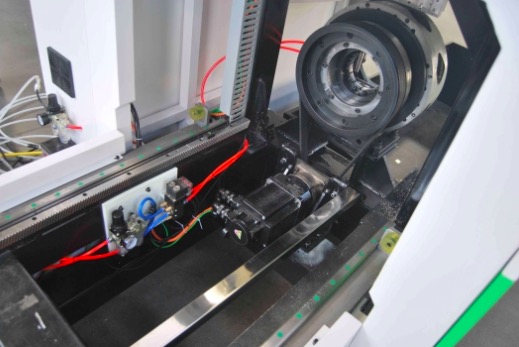
Modern fiber laser tube cutting machines offer capabilities that were unattainable with conventional methods. Key technical features include:
- Automatic chuck systems that hold round, square, and rectangular tubes securely while allowing continuous rotation.
- High-speed servo drives capable of travel speeds up to 100 meters per minute and accelerations of 1.0G, enabling rapid processing of complex cut patterns.
- Positioning accuracy of ±0.05 millimeters and repositioning accuracy of ±0.03 millimeters, ensuring consistent quality across production runs.
- Multi-axis cutting heads
Get a Quote
Regardless of whether you require general advice or specific support, we are happy to help you.
Recent Post
-
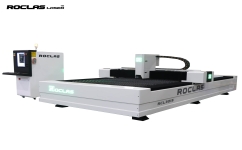
 Robotic Arm Laser Systems: Redefining Precision and Flexibility in Industrial ManufacturingAbstractThe integration of robotic arms with laser processing technologies represents a paradigm s...2026-07-06 16:30:57
 -
 The Ultimate Guide to High-Performance Fiber Laser Metal Cutting MachinesIntroductionFiber laser metal cutting machines have revolutionized the manufacturing industry with...2025-06-24 19:56:52
 -
 Understanding the Key Differences Between Fiber Laser and CO2 LaserIn the world of laser cutting and engraving, two types of lasers dominate the industry fiber laser...2025-03-30 09:31:59
 -
 The Ultimate Guide to Programmable Laser Cutters Revolutionizing Precision and EfficiencyIntroductionIn the realm of modern manufacturing and design, programmable laser cutters have emerg...2025-03-29 09:32:00
 -
 The Ultimate Guide to Steel Laser Cutting Techniques, Benefits, and ApplicationsIntroductionSteel laser cutting has revolutionized the manufacturing and fabrication industries, o...2025-03-24 08:31:07
 -
 Why Choose Roclas Fiber Laser Cutting for PED Components?IntroductionLaser cutting technology has revolutionized metal fabrication, offering unmatched prec...2025-06-16 07:49:19