Beyond the Beam: How Fiber Laser Integration is Reshaping Metal Fabrication Economics
Abstract
The global sheet metal fabrication sector is undergoing a structural shift from standalone mechanical processing to integrated, light-based manufacturing cells. While much industry commentary focuses on raw laser power metrics, the more consequential developments lie in machine architecture, control software integration, and the ability to process reflective and mixed materials without sacrificing throughput. This article examines the current state of fiber laser cutting technology, analyzes performance data across machine classes, and considers how manufacturers such as ROCLAS® MACHINERY CO., LTD. are positioning their portfolios to address the practical constraints of modern fabrication shops—space, power, material diversity, and operator skill.
Industry Background and Data Analysis
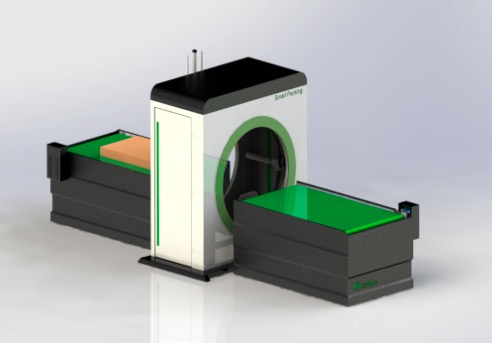
Fiber laser cutting has moved decisively from a niche alternative to the default choice for thin-to-medium sheet metal processing. The transition has been driven less by any single breakthrough than by the cumulative maturation of several subsystems: higher-brightness laser sources, faster servo drives, more stable gantry structures, and control software capable of automated nesting and real-time process monitoring.
The market response has been predictable in direction but uneven in pace. Low-power machines (1–3 kW) remain the volume segment, particularly among job shops and smaller fabricators, while the 6–12 kW range has become the competitive battleground for production environments. At the upper end, 15–20 kW systems serve thick-plate and heavy structural work, though the economics of these machines depend heavily on utilization rates and the availability of high-quality assist gas.
| Machine Class | Typical Power Range | Positioning Accuracy | Primary Applications | Key Economic Driver |
|---|---|---|---|---|
| Entry-level sheet cutter | 1–3 kW | ±0.03 mm | Signage, thin stainless, HVAC | Low capital cost, fast payback |
| Production sheet cutter | 6–12 kW | ±0.03 mm | Automotive parts, enclosures, furniture frames | Throughput per shift, nesting efficiency |
| High-power plate cutter | 15–20 kW | ±0.03 mm | Structural steel, heavy machinery | Thick-section capability, gas cost control |
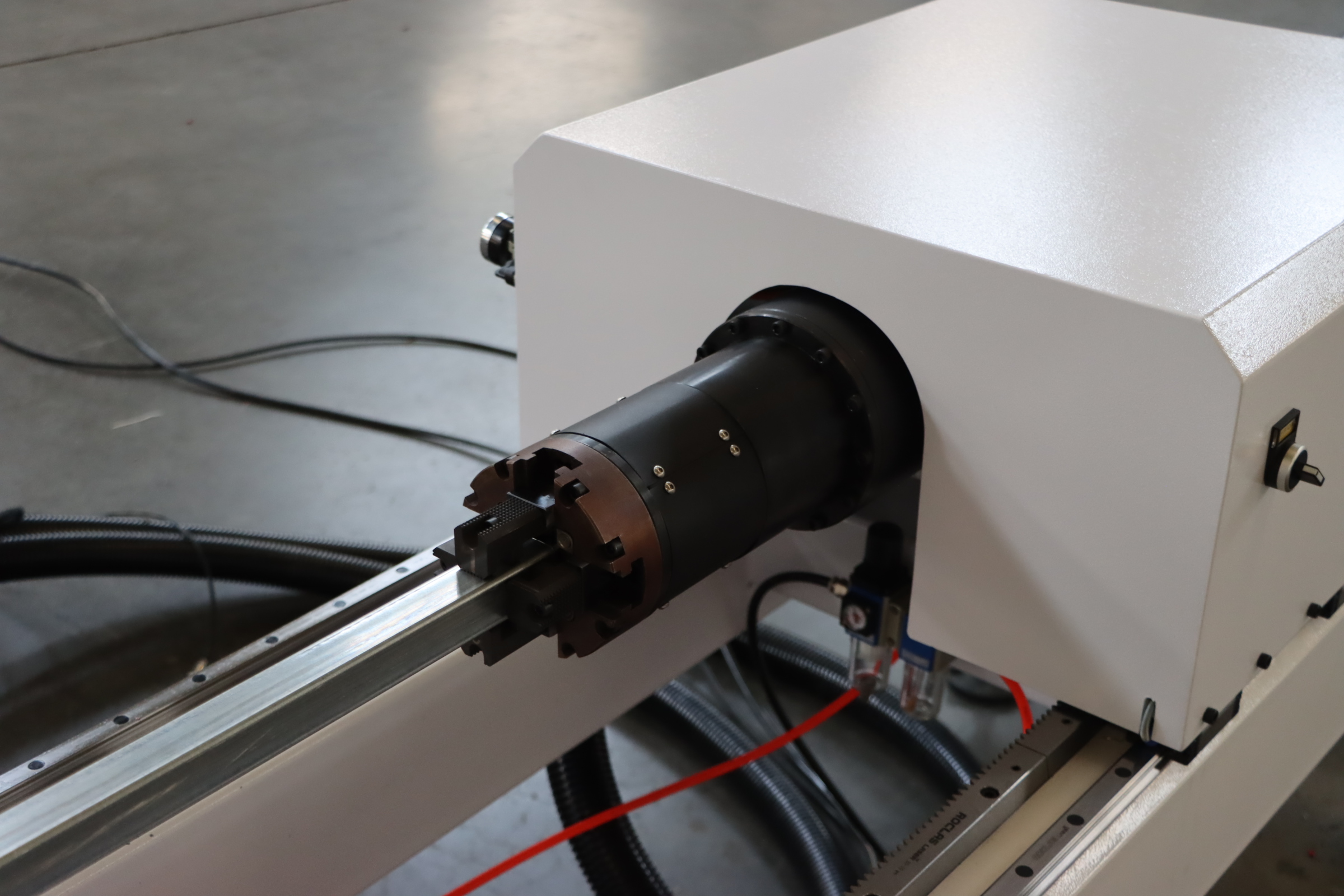
| Tube/pipe specialist | 1–3 kW | ±0.05 mm | Furniture tube, fitness equipment, pipeline | Diameter range, chuck automation |
| 5-axis 3D center | Application-dependent | ±0.03 mm | Complex formed parts, aerospace brackets | Multi-axis reach, setup reduction |
| Hybrid CO2/fiber | 200–500 W (CO2) | ±0.03 mm | Acrylic, wood, leather, thin metal | Material versatility in one cell |
Two observations follow from this table. First, positioning accuracy has largely converged across classes—±0.03 mm is now standard rather than exceptional—which means differentiation has shifted toward acceleration, nesting intelligence, and uptime. Second, the persistence of hybrid CO2/fiber platforms reflects a real market need: many workshops process acrylic, wood, and leather alongside metals, and running two separate machines is often impractical in terms of floor space and capital.
A third, less visible trend concerns machine bed construction. The choice between single-piece welded beds and modular screw-connected designs is not merely a logistics question. Modular beds allow machines to be transported and installed in buildings with restricted access—a common constraint in urban fabrication facilities—without compromising the rigidity required for accurate cutting. This is an underappreciated enabler of adoption in dense industrial zones.
Technology Application and Brand Case Study
The practical value of these developments becomes clearer when examined through specific product architectures. ROCLAS® MACHINERY CO., LTD., a laser equipment manufacturer with over fifteen years of industry experience and a portfolio spanning fiber laser cutters, 5-axis centers, hybrid CO2/fiber machines, welding systems, and coil-fed processing lines, offers a useful reference point for how a mid-to-high-end portfolio is structured around real fabrication workflows.
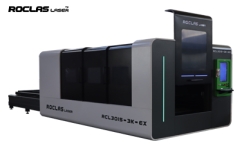
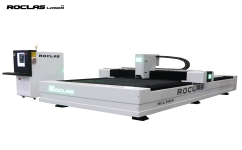
The company's fiber laser cutting range illustrates the integration logic described above. Its sheet metal machines combine industrial-grade heavy-duty steel structures machined on CNC five-face centers with imported servo drives and reducers, and are offered across a power band from 1 kW to 20 kW using Raycus or MAX sources. The inclusion of a high-reflectivity suppression module is particularly relevant: it allows stable processing of 1–2 mm copper and 2–3 mm aluminum, materials that historically caused back-reflection problems and forced fabricators to resort to slower or more expensive methods. This is a concrete example of how component-level engineering, rather than headline wattage, expands the practical application envelope.
Equally instructive is ROCLAS's hybrid CO2/fiber platform, which combines a sealed CO2 glass tube with fiber capability in a 1500×3000 mm working area. For shops that cut acrylic or wood alongside stainless steel, this single-machine approach reduces handling, floor-space demand, and the capital burden of maintaining two separate process lines. The company's 5-axis fiber center, with a fixed gantry, movable workbench, and a three-dimensional head offering n×360° infinite rotation, addresses a different problem: formed and complex 3D workpieces that cannot be handled on a flatbed. Together, these platforms suggest a portfolio strategy organized around material and geometry diversity rather than a single flagship model.
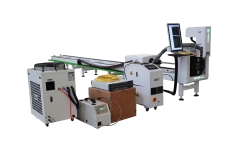
It is also worth noting the supporting infrastructure. ROCLAS supplies nitrogen generators with 99.999% purity, coil uncoilers for automated metal coil feeding, and integrated waste conveying systems. These are not peripheral accessories; they determine whether a laser cell can run continuously without external gas supply interruptions or manual material handling. The availability of modular bed designs—screw-connected rather than welded, with the same manufacturing quality—further indicates attention to installation realities that are often overlooked in specification sheets.
Certification coverage (ISO 9001, CE, FDA, UL, PDL) and a patent portfolio of more than fifty filings, with ten or more added annually, provide a reasonable proxy for manufacturing discipline and intellectual property investment. For buyers comparing suppliers, these are not marketing decorations but indicators of whether a machine will remain supportable and compliant over a multi-year service life.
Conclusion and Outlook
The fiber laser cutting market is no longer defined by the question of whether to adopt the technology, but by how intelligently it is integrated into production systems. Three directions appear most consequential over the next planning cycle. First, automation of material flow—coil feeding, robotic loading, and waste conveyance—will increasingly determine effective throughput, particularly as laser sources themselves approach practical speed limits for thin materials. Second, multi-process capability, whether through hybrid CO2/fiber configurations or combined sheet-and-tube platforms, will continue to appeal to fabricators facing diverse order books and constrained floor space. Third, the ability to process reflective and difficult materials reliably will remain a meaningful differentiator, since it directly expands the addressable job mix without requiring secondary operations.
For equipment manufacturers, the implication is that competitive advantage will accrue less to those who publish the highest power figure and more to those who engineer coherent systems—rigid structures, stable drives, intelligent nesting, and sensible auxiliary equipment—around the actual constraints of the shop floor. ROCLAS's range, which spans entry-level cutters through 5-axis centers and hybrid platforms, reflects this systems-oriented approach, and it is likely the direction the broader industry will continue to follow.
Obtenez un devis
Que vous ayez besoin de conseils généraux ou de soutien spécifique, nous serons heureux de vous aider.
Article récent
-
 Robotic Arm Laser Systems: Redefining Precision and Flexibility in Industrial ManufacturingAbstractThe integration of robotic arms with laser processing technologies represents a paradigm s...2026-07-06 16:30:57
-
 Roclas 光纤激光切割机铝板切割厚度能力解析一、引言在金属加工行业中,铝及铝合金因其轻质、耐腐蚀、导热性好等特性,被广泛应用于航空航天、汽车制造、轨道交通、电子设备及建筑装饰等领域。铝材的高反射率特性使其成为激光切割中较难处理的材料之一。许...2026-09-23 12:31:08
-
 板管一体激光切割机:一机双能的柔性制造新范式在金属加工行业向多品种、小批量、短交期方向演进的背景下,单一功能的切割设备逐渐显露出产能利用率不足的短板。板管一体激光切割机通过在同一个加工平台上集成平板切割与管材切割能力,为中小规模制造企业提供...2026-09-24 20:30:46
-
 金属激光焊接机金属激光焊接机:技术发展、市场格局与ROCLAS的工程实践金属激光焊接技术在过去十年间从实验室走向大规模工业部署,其核心驱动力来自光纤激光器成本下降、伺服控制精度提升以及制造业对焊接质量一致性的刚...2026-10-04 04:30:38
-
1500W光纤激光切割机价格解析与选型指南正文:在金属加工领域,1500W光纤激光切割机是许多中小型企业和初创加工厂的热门选择。它既能满足日常碳钢、不锈钢板材的切割需求,又在采购成本和运行费用之间取得了较好的平衡。一台1500W激光切割机...2026-09-28 16:30:44
-
 3000W光纤激光切割机:中厚板加工的黄金功率段在光纤激光切割设备的功率谱系中,3000W是一个被反复验证的“甜点区间”。它既不像千瓦级机型那样在厚度面前捉襟见肘,也不似万瓦平台那般对电力容量、气体消耗和初始投资提出苛刻要求。对于大量以碳钢、不...2026-10-01 08:31:49