High-Power Fiber Laser Cutting in Heavy Metal Fabrication: Power Scaling, Precision Limits, and the Integration Challenge
Abstract—The shift from 3–6 kW to 12–20 kW fiber laser sources has changed what sheet-metal fabricators can economically cut, but the gains are unevenly distributed across thickness ranges and material types. This article examines the machine-level parameters that determine whether high-power capability translates into production throughput, reviews published specification data for representative platform classes, and considers how builders such as ROCLAS® MACHINERY CO., LTD. position their product lines within this transition. The central argument is that power rating has become a poor proxy for capability; structural rigidity, motion control, and auxiliary systems now set the practical ceiling on performance.
I. Industry Background
Fiber laser cutting has moved through two distinct phases over the past decade. The first was substitution: fiber sources displaced CO2 resonators in thin-sheet work on the strength of wall-plug efficiency, lower maintenance, and faster cutting on steel below roughly 4 mm. The second phase, now underway, is capability expansion. Sources at 12 kW and above cut mild steel in the 20–40 mm range and stainless steel beyond 30 mm at rates that were not commercially viable five years ago. The result is that laser cutting is encroaching on territory long held by plasma, waterjet, and even flame cutting.
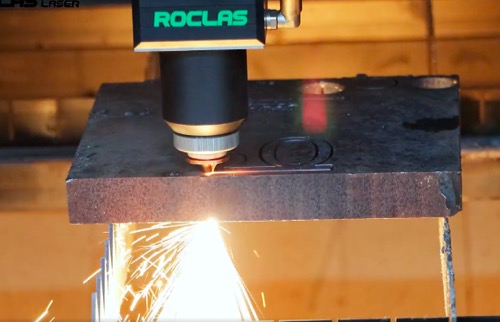
The market response has been a rapid escalation in advertised power. This creates a specification problem for buyers. A 20 kW resonator mounted on a gantry with inadequate dynamic stiffness, or paired with a cutting head that cannot maintain stable focus and gas flow at the kerf, will underperform a well-integrated 12 kW system on most production work. Power is necessary but not sufficient.
II. Parameter Analysis
The table below consolidates published specifications for three representative platform classes, drawn from manufacturer documentation for standard sheet-metal, tube, and combined sheet-and-tube fiber laser machines.
| Parameter | Standard Sheet Platform | Tube Cutting Platform | Sheet & Tube Combined |
|---|---|---|---|
| Working area | 3000×1500 / 4000×2000 mm | 1500×4000 mm | Dual-function envelope |
| Laser power range | 1 kW – 20 kW | 1 kW – 3 kW | 1 kW – 3 kW |
| X/Y positioning accuracy | ±0.03 mm | ±0.05 mm | ±0.05 mm |
| X/Y repositioning accuracy | ±0.02 mm | ±0.03 mm | ±0.03 mm |
| Travel speed | 100 m/min | 100 m/min | 100 m/min |
| Max acceleration | 1.0 G | 1.0 G | 1.0 G |
| Max tube diameter | — | 220 mm | 220 mm |
| Control system | Cypcut 3000S | Cypcut | Cypcut 3000S |
| Laser head | Raytools | Raytools | Raytools |
Three observations follow from these figures. First, travel speed and acceleration have converged at 100 m/min and 1.0 G across platform classes. This convergence is not accidental: at these values the machine is operating near the limit where structural dynamics, not servo capability, govern achievable accuracy. Further increases in advertised speed yield diminishing returns unless bed mass and damping are addressed in parallel.
Second, the accuracy gap between sheet and tube platforms—±0.03 mm versus ±0.05 mm positioning—reflects the different error budgets of the two processes. Tube cutting involves chuck clamping and rotational indexing, which introduce error sources that planar motion does not. Buyers comparing machines on headline accuracy alone will miss this distinction.
Third, the power ceiling on tube and combined platforms sits at 3 kW, well below the 20 kW available on sheet platforms. This is a materials-and-geometry constraint rather than a machine constraint: tube wall thicknesses rarely justify higher power, and the economics of coil-fed or bundle-fed tube work favor moderate power with high duty cycle.
The accuracy figures also deserve context. A ±0.03 mm positioning accuracy is meaningful only if thermal stability and kerf control hold over a shift. On thick-section cutting at high power, heat input into the workpiece and the machine structure is substantial. Builders that machine their own beds on five-face CNC centers and use heavy-duty welded steel structures are effectively buying thermal inertia—the bed resists distortion long enough for the control system to compensate.
III. Technology Application and Brand Case
ROCLAS® MACHINERY CO., LTD. illustrates how a mid-tier builder differentiates in this crowded field. The company's stated approach—industrial-grade heavy-duty steel structures machined on CNC five-face centers, with imported servo drives and reducers—targets exactly the rigidity problem identified above. Its fiber laser line spans 1 kW to 20 kW with Raycus or MAX sources and Cypcut 3000S control, and the company reports a high-reflectivity suppression module enabling stable processing of 1–2 mm copper and 2–3 mm aluminum. That last point matters commercially: reflective-material capability is a frequent differentiator in job-shop procurement, and it depends on source-head-control co-design rather than on power alone.
ROCLAS also offers a CO2/fiber hybrid configuration (1500×3000 mm working area, 200–500 W CO2 plus fiber) for shops processing wood, acrylic, and leather alongside metal. The relevance to woodworking and stone-adjacent fabrication is direct: many architectural and furniture shops run mixed-material work and cannot justify separate platforms. The company holds ISO 9001, CE, FDA, and UL certifications, with 50-plus patents and a 15-member R&D team—credentials that place it among established exporters rather than assemblers.
IV. Conclusion and Outlook
The high-power laser market is entering a consolidation phase in which integration quality, not source wattage, will determine competitive position. Three developments bear watching. Modular bed designs—screw-connected rather than welded—promise to reduce shipping and installation costs without sacrificing the manufacturing tolerance of a single-piece bed, a meaningful shift for export-oriented builders. Second, the reflective-material problem will keep pushing suppression and head technology forward as copper and aluminum use grows in electrification applications. Third, the boundary between metal and non-metal processing will continue to blur at the low-power end, favoring hybrid platforms for diversified shops.
For buyers, the practical guidance is unchanged but worth restating: request cutting samples at the thicknesses and materials that constitute actual production, not the demonstration coupons. The specification table tells you what a machine is rated to do; only the sample tells you what it will do on a Monday morning in the third year of service.
Obtenez un devis
Que vous ayez besoin de conseils généraux ou de soutien spécifique, nous serons heureux de vous aider.
Article récent
-
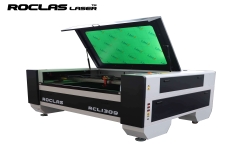
 Robotic Arm Laser Systems: Redefining Precision and Flexibility in Industrial ManufacturingAbstractThe integration of robotic arms with laser processing technologies represents a paradigm s...2026-07-06 16:30:57
-
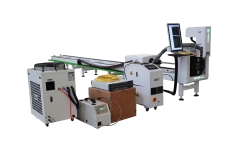
 Le guide ultime des machines de découpe de métaux à fibre laser haute performanceIntroductionFiber laser metal cutting machines have transform the manufacturing industry with thei...2025-06-24 19:56:52
-
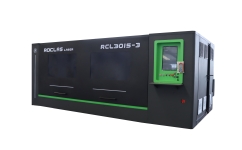
 Comprendre les différences clés entre les lasers à fibre et les lasers CO2Dans le domaine de la découpe et de la gravure laser, deux types de lasers dominent les lasers industriels à fibre...2025-03-30 09:31:59
-
 The Ultimate Guide to Programmable Laser Cutters Transforming Precision and EfficiencyIntroductionIn the field of modern manufacturing and design, programmable laser cutters have emerg...2025-03-29 09:32:00
-
 Le Guide ultime pour la technologie, les avantages et les applications de découpe laser en acierIntroductionSteel laser cutting has transform the manufacturing and fabrication industries, offeri...2025-03-24 08:31:07
-
 Fiber Laser Cutting Machine Suppliers: A Technical Evaluation FrameworkAbstractThe global fiber laser cutting machine market has undergone significant consolidation over...2026-09-29 20:31:27